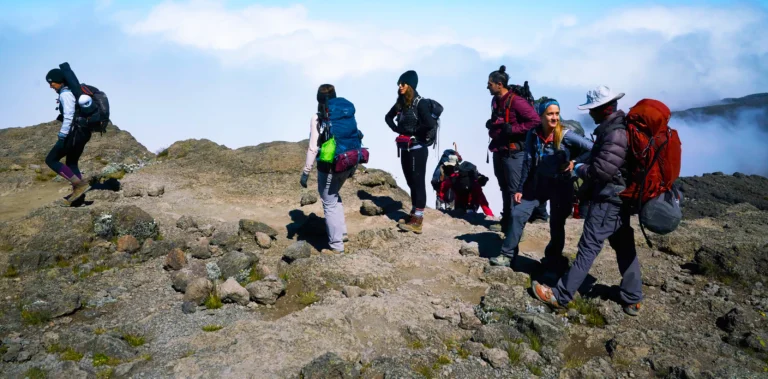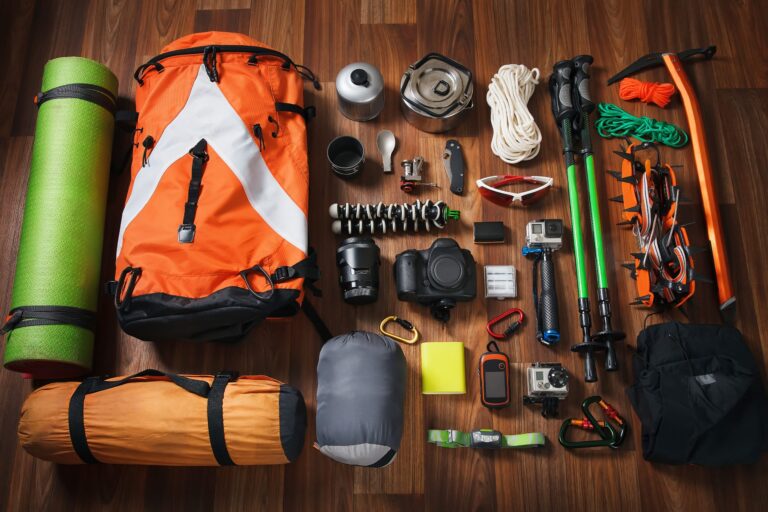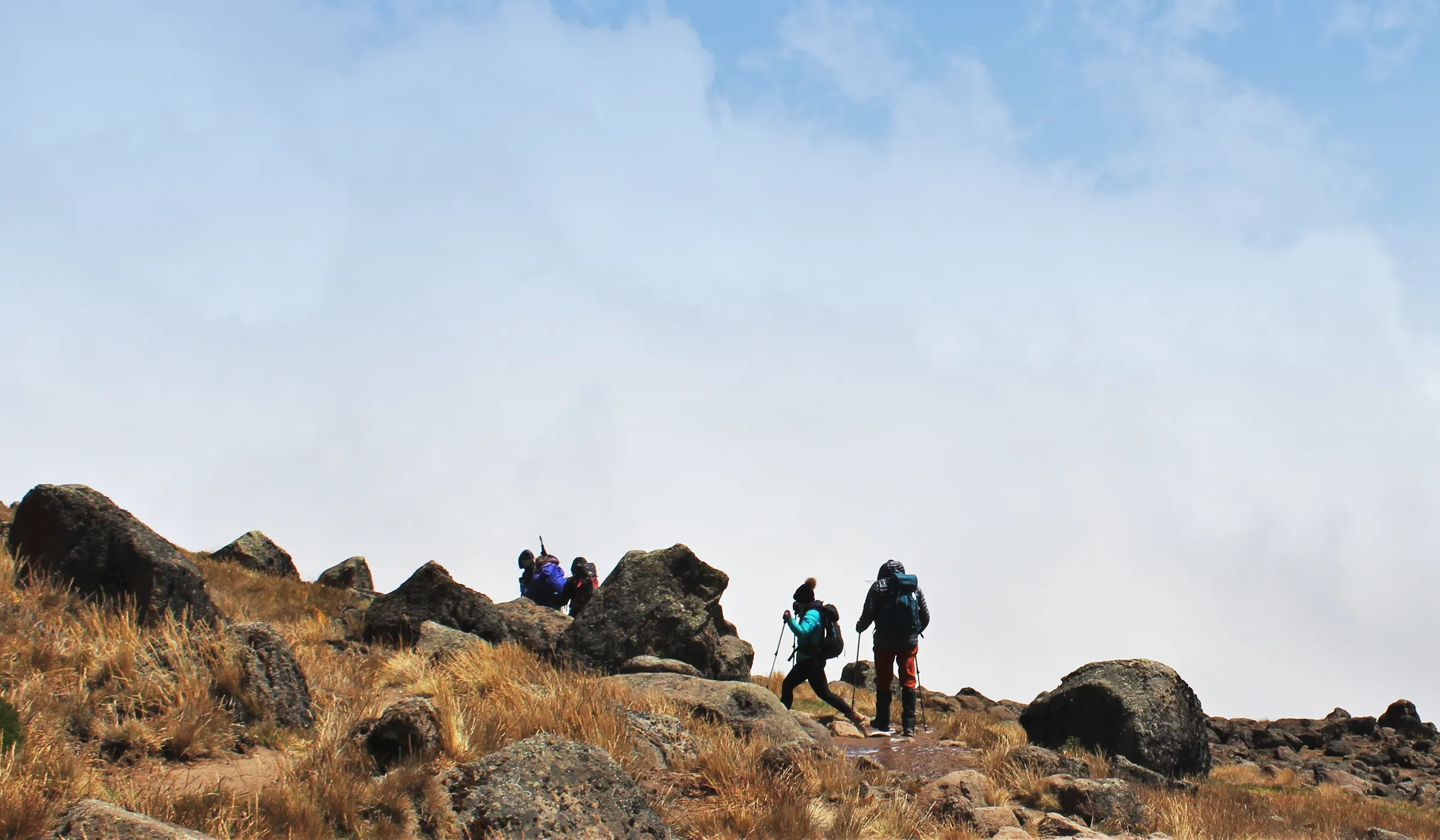
Before beginning your journey to the Roof of Africa, it is important to understand that there are seven main routes leading to the summit of Mount Kilimanjaro. Each trail offers a different experience, with varying levels of difficulty, scenery, trekking duration, and summit success rates. Choosing the right route depends on your physical fitness, previous hiking experience, the amount of time you have available, and the type of adventure you are looking for. While first-time trekkers often prefer easier and more gradual routes such as Marangu, those seeking dramatic landscapes and a more rewarding wilderness experience usually choose Machame or Lemosho.
Machame Route
Difficulty: Moderate
Distance: 62 km
Duration: 6–8 Days
Summit Success Rate: High
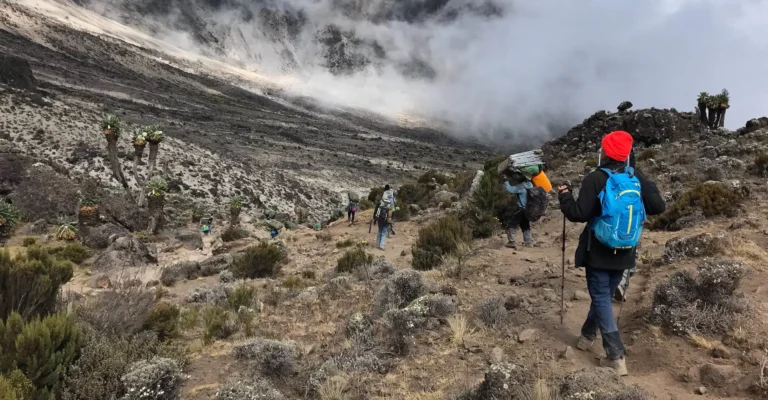
Often referred to as the “Whiskey Route,” the Machame Route is one of the most popular and scenic paths on Mount Kilimanjaro. The trail begins on the southern side of the mountain and passes through lush rainforest, moorland, alpine desert, and glacial landscapes before reaching the summit. Its diverse scenery and exciting terrain make it a favorite among adventurous trekkers.
One of Machame’s greatest strengths is its excellent acclimatization profile. The route follows the “climb high, sleep low” strategy, allowing hikers to adjust more effectively to the increasing altitude. The seven-day itinerary offers the highest success rates, while the six-day option is generally recommended only for experienced trekkers. Since there are no mountain huts along this route, all overnight stays are in tents, providing a true camping adventure.
Lemosho Route
Difficulty: Moderate
Distance: 70 km
Duration: 7–8 Days
Summit Success Rate: High
The Lemosho Route is widely regarded as one of the finest routes on Mount Kilimanjaro due to its spectacular scenery, peaceful trails, and outstanding acclimatization schedule. Starting from the western side of the mountain, the route passes through untouched rainforest before crossing the vast Shira Plateau, one of the world’s largest high-altitude plateaus.
Because the early sections receive fewer climbers than other routes, trekkers enjoy a quieter and more immersive wilderness experience. Wildlife such as antelopes may occasionally be spotted in the forest. As the route later joins the Machame trail, hikers benefit from both breathtaking scenery and gradual altitude gain. Most climbers complete the trek in seven days, although adding an extra day significantly improves acclimatization and summit success. Camping is required throughout the journey.
Marangu Route
Difficulty: Easy to Moderate
Distance: 72 km
Duration: 5–6 Days
Summit Success Rate: Moderate to Low
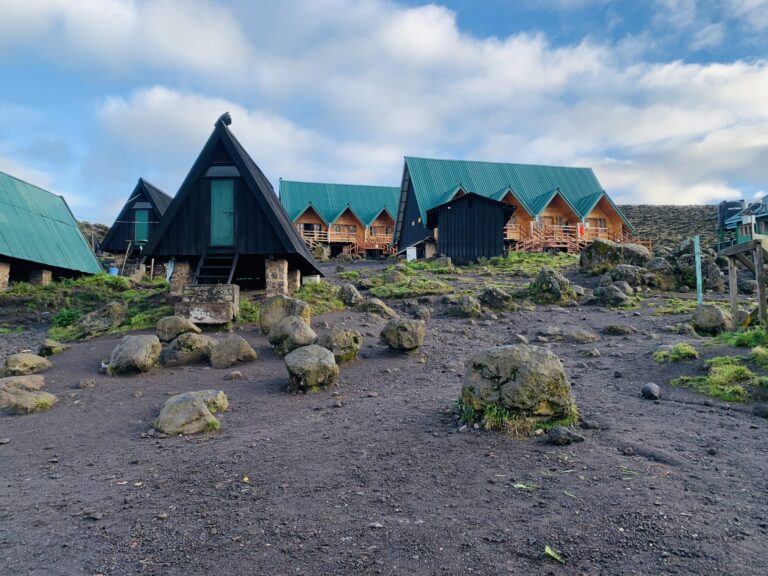
Known as the “Coca-Cola Route,” Marangu is the oldest and most established trail on Mount Kilimanjaro. It is the only route that offers mountain huts instead of tents, making it attractive for climbers who prefer more comfortable overnight accommodations. The huts provide bunk beds, shared dining areas, and basic restroom facilities, although sleeping bags are still required.
Marangu approaches the mountain from the southeast and follows the same trail for both ascent and descent. While its gradual slopes make it physically less demanding than many other routes, the shorter trekking duration leaves limited time for acclimatization. As a result, summit success rates are generally lower compared to longer routes. Its popularity also means the trail can become crowded during peak climbing seasons.
Northern Circuit Route
Difficulty: Challenging
Distance: 98 km
Duration: 8–10 Days
Summit Success Rate: Very High
The Northern Circuit is the longest and one of the most rewarding routes on Mount Kilimanjaro. Beginning on the western side of the mountain, it circles around the rarely visited northern slopes before approaching the summit from the east. This extended journey offers nearly panoramic views of Kilimanjaro and surrounding landscapes while avoiding the crowds found on more popular routes.
Its longer duration provides the best opportunity for proper acclimatization, resulting in the highest summit success rates of all Kilimanjaro routes. The trek passes through rainforest, moorland, alpine desert, and remote wilderness areas before descending via the Mweka Route. It is an excellent choice for climbers with enough time who want the highest chance of reaching Uhuru Peak.
Umbwe Route
Difficulty: Very Challenging
Distance: 53 km
Duration: 5–6 Days
Summit Success Rate: Low
The Umbwe Route is widely considered the most demanding trail on Mount Kilimanjaro. It is steep, direct, and gains altitude rapidly, leaving little opportunity for the body to acclimatize properly. For this reason, it is recommended only for experienced hikers who are confident in their ability to cope with high elevations.
Despite its difficulty, Umbwe offers a peaceful and uncrowded climbing experience. After ascending through dense rainforest, the route joins the Southern Circuit at Barranco Camp before continuing to Barafu Camp and finally Uhuru Peak. Descent is made via the Mweka Route. Its dramatic terrain appeals to seasoned mountaineers seeking a physically demanding challenge.
Rongai Route
Difficulty: Easy to Moderate
Distance: 73 km
Duration: 6–7 Days
Summit Success Rate: Moderate
The Rongai Route is the only Kilimanjaro trail that approaches the mountain from the northern side, near the Kenyan border. This route is known for its gentle gradients, quieter trails, and drier climate, making it an excellent option during the rainy season.
Although Rongai provides a relatively gradual ascent, it offers fewer opportunities for the “climb high, sleep low” acclimatization strategy than routes such as Machame or Lemosho. Choosing the seven-day itinerary significantly improves the chances of reaching the summit successfully. Along the way, trekkers cross beautiful alpine desert landscapes and enjoy expansive views toward Kenya before descending via the Marangu Route.
Choosing the Right Kilimanjaro Route
Every Kilimanjaro route offers a unique climbing experience. If comfort is your priority, the Marangu Route is the only option with hut accommodations. For spectacular scenery and excellent acclimatization, Machame and Lemosho remain the top choices for most trekkers. Those seeking the highest summit success rates should consider the Northern Circuit, while experienced climbers looking for a demanding challenge may prefer Umbwe. If you want a quieter trail with gentle slopes, Rongai provides an excellent alternative.
Selecting the best route ultimately depends on your experience level, available time, fitness, and personal preferences. With the right preparation and itinerary, every route offers an unforgettable journey to Africa’s highest peak.