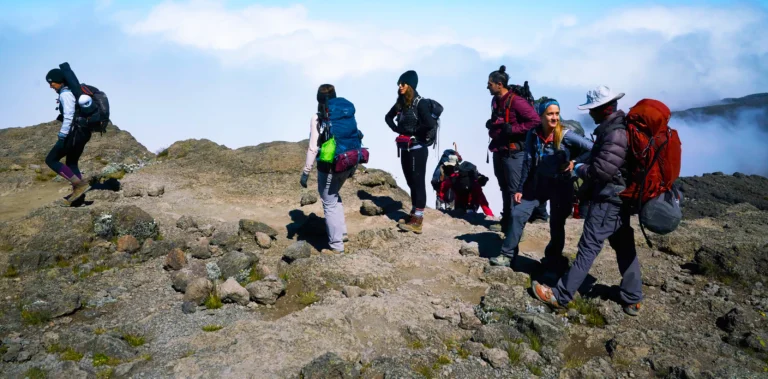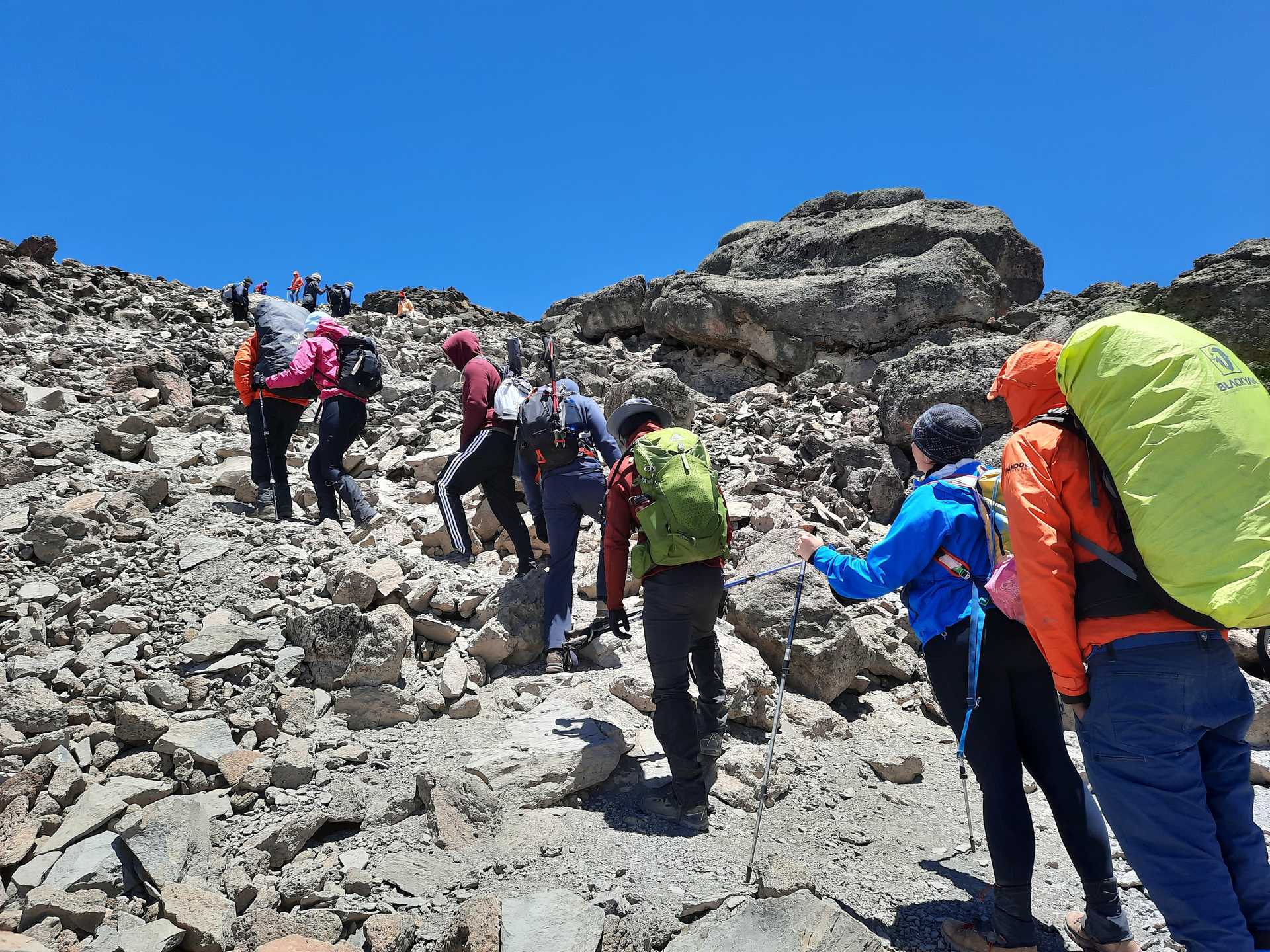
Climbing Mount Kilimanjaro is not a one-day or even a short weekend adventure—it is a carefully paced expedition that typically takes between 5 and 9 days on the mountain, depending on the chosen route, acclimatization strategy, and overall trekking style. While the distance to the summit might seem manageable on a map, the combination of altitude, terrain, and the body’s need to adapt makes time the most important factor for success.
Typical Duration: 5 to 9 Days on the Mountain
Most climbers spend 5 to 9 days ascending Kilimanjaro. The variation is not random—it is directly connected to how well your body adjusts to high altitude.
Shorter routes, such as the Marangu Route (commonly 5–6 days), are designed for quicker ascents. These can be appealing for travelers with limited time, but they come with a higher risk of altitude sickness because the body has less time to acclimatize.
Longer routes, such as the Lemosho Route (7–8 days) or the Northern Circuit (8–9 days), allow a slower ascent. This gradual approach significantly improves comfort, reduces altitude-related risks, and increases summit success rates.
Why Time Matters So Much
The biggest factor determining how long it takes to climb Kilimanjaro is not distance—it is altitude adaptation.
As you climb higher, oxygen levels decrease. Your body needs time to adjust by producing more red blood cells and improving oxygen efficiency. If you ascend too quickly, you risk altitude sickness, which can force climbers to turn back even if they are physically strong.
This is why longer itineraries are strongly recommended. On Kilimanjaro, “slow is fast”—a steady pace increases your chances of reaching the summit.
Breakdown of a Typical Kilimanjaro Itinerary
Although routes differ, most follow a similar structure:
- Day 1–2: Trek through rainforest zones, moderate hiking with high humidity and lush scenery
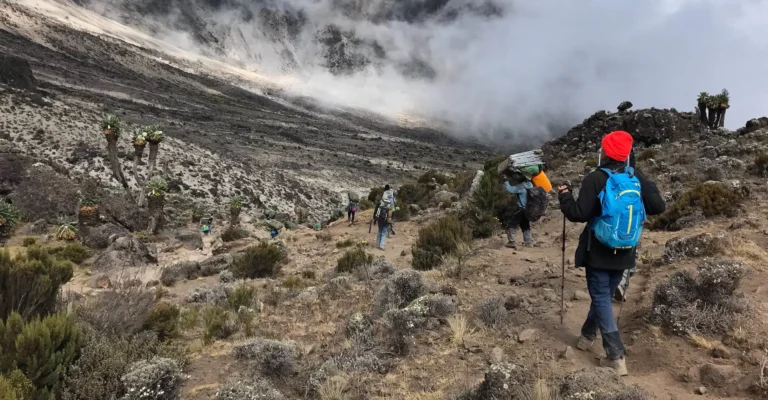
- Day 3–5: Transition into heath and moorland zones, higher altitude begins to affect breathing
- Day 5–7: Alpine desert zone, colder temperatures, thinner air, more challenging terrain
- Summit Night (Usually Day 5–8 depending on route): Midnight ascent to Uhuru Peak, the most demanding part of the climb
- Descent (1–2 days): Rapid descent back to lower altitude and exit gate
The summit attempt itself is usually started around midnight so climbers can reach the peak at sunrise, a moment considered one of the most rewarding experiences in Africa.
Short Routes vs Long Routes
The difference in duration also affects difficulty:
Short Routes (5–6 days):
- Faster ascent
- Higher risk of altitude sickness
- Lower success rates
- Suitable for experienced trekkers with limited time
Medium Routes (6–7 days):
- Balanced approach
- Moderate acclimatization
- Good success rates
Long Routes (7–9 days):
- Best acclimatization profile
- Highest summit success rates (often 85–95%)
- More comfortable pace
- Recommended for beginners
Routes like Lemosho and Northern Circuit are widely considered the best options for maximizing both safety and enjoyment.
Additional Time Beyond the Climb
When planning a Kilimanjaro expedition, it is important to consider time beyond the actual trekking days:
- Arrival day in Tanzania: Rest and preparation in Moshi or Arusha
- Pre-climb briefing and gear check: Usually 1 day before departure
- Post-climb recovery: 1–2 days recommended after descent
This means the full travel experience often requires 8 to 12 days total, even if the climb itself is 6 to 9 days.
What Can Affect the Duration?
Several factors can influence how long your Kilimanjaro climb takes:
- Route choice: Longer routes naturally take more days
- Acclimatization pace: Some climbers need extra rest days
- Weather conditions: Heavy rain or snow can slow progress
- Group pace: Guided group treks move at a collective speed
- Health and altitude response: Some climbers may require slower ascent for safety
So, how long does it take to climb Mount Kilimanjaro? The honest answer is: anywhere from 5 to 9 days on the mountain, and up to 12 days including arrival and recovery time.
While it is technically possible to summit in fewer days, the most successful and enjoyable climbs are those that prioritize time for acclimatization. On Kilimanjaro, time is not just a schedule—it is a safety strategy and the key to standing on the Roof of Africa.